
The Ultimate Guide to Fold Up Bikes: Efficiency, Portability, and Performance
The modern urban landscape is changing. With increasing traffic congestion and the need for sustainable, space-saving transportation, fold up bikes—often referred to as folding e-bikes—have emerged as the definitive solution for commuters, city dwellers, and recreational riders alike. Unlike traditional bicycles that demand dedicated storage racks or large garage spaces, a folding bike offers the flexibility to be tucked away under a desk, in a closet, or inside the trunk of a compact car.
In this guide, you will learn about the mechanics of folding technology, how to distinguish between commuter-grade and mountain-ready folding frames, and what specific technical factors—such as motor power, battery capacity, and folding hinge durability—you need to evaluate before making a purchase. Our goal is to provide you with the information necessary to make an informed decision based on your specific lifestyle and terrain requirements.
Why Choose a Folding E-Bike?
The primary advantage of a folding bike is utility. For many, the transition to e-bikes is motivated by the desire to cover longer distances without arriving at their destination fatigued. Folding models combine this electric assistance with a frame geometry that can be reduced in size in a matter of seconds. Whether you are living in an apartment with limited space, or you use public transit as part of your daily commute, a bike that folds provides unparalleled convenience.
However, not all folding bikes are created equal. Some prioritize ultra-portability for light city use, while others, specifically within the mountain e-bike category, prioritize off-road durability, wide tires for traction, and robust motors capable of handling steep inclines. Understanding your intended usage—be it smooth pavement or rugged trails—is the first step in narrowing down your options.
Critical Buying Factors
When you begin your search for the perfect folding bike, consider these fundamental elements:
- Folding Mechanism: Look for hinges that feature double-locking safety mechanisms to ensure frame rigidity during high-speed rides.
- Motor Torque: If your commute involves hills, prioritize a motor with higher torque (measured in Newton-meters) rather than just raw wattage.
- Tire Versatility: Fat tires provide superior stability and comfort, acting as natural suspension on uneven surfaces.
- Weight vs. Durability: While lightweight bikes are easier to carry, folding mountain e-bikes are often slightly heavier due to reinforced frames and larger batteries.
Comparison: Folding Mountain E-Bikes vs. Standard Urban Foldables
To help you decide, let's look at how specialized folding mountain bikes differ from standard city commuters.
| Feature | Folding Mountain E-bike | Standard City Foldable |
|---|---|---|
| Terrain | Mixed/Off-road | Paved/Flat |
| Tire Type | Fat Tires (4-inch+) | Narrow/Road Tires |
| Motor Power | High Torque (750W+) | Moderate (250W-500W) |
| Suspension | Full or Front Fork | Minimal/None |
| Ideal User | Adventure/Steep Commutes | Occasional/Short City Trips |
If your daily path includes gravel, potholes, or steep gradients, the Folding Mountain E-bike category is the superior choice. The increased traction from fat tires and the higher torque of the motors provide a level of safety and comfort that standard, thin-tire folding bikes simply cannot match.
Introducing the VIVI Mountain E-Bike Category
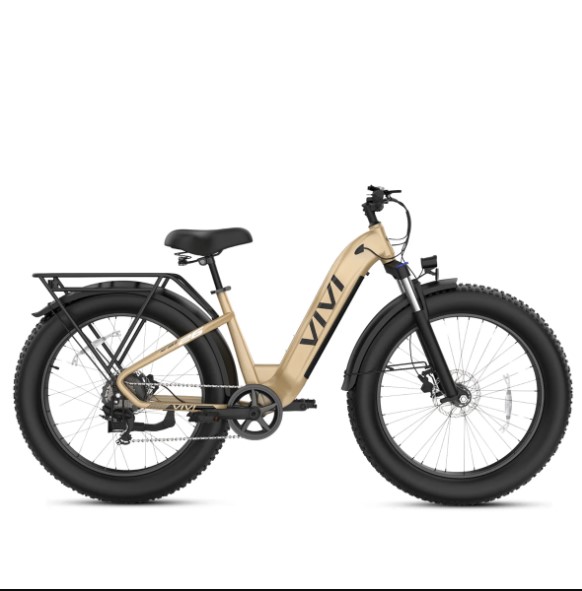
Among the available options for riders who need a blend of off-road ruggedness and space-saving portability, the VIVI mountain e-bike series stands out. These bikes are engineered for versatility, utilizing robust frames that fold to accommodate storage constraints while maintaining the structural integrity required for mountain-category performance.
The VIVI lineup is specifically designed for riders who refuse to sacrifice power for size. By integrating fat tire technology with advanced electrical components, these bikes offer a stable ride over loose sand, gravel, and rough city streets. If this model matches your riding needs, you can check the latest official pricing below.
🔥 Limited-Time Official Discount
Check today's official price and available promotions before stock changes.
🚴 Check Today's Price✅ Official Store ✓ Secure Checkout ✓ Fast Shipping
Trust and Performance: What Riders Say
What Real Customers Say About VIVI

🔥 Limited-Time Official Discount
Check today's official price and available promotions before stock changes.
🚴 Check Today's Price✅ Official Store ✓ Secure Checkout ✓ Fast Shipping
Maintenance and Long-Term Ownership
Owning a folding e-bike requires a slightly different maintenance mindset than a standard bike. Because the folding hinges are the most critical component, you should keep them clean and lubricated. Periodically check the tension on the bolts to ensure the frame remains stiff and stable during operation. Additionally, keep an eye on your tire pressure; since fat tires have a large volume of air, maintaining the recommended PSI is essential for both battery efficiency and puncture protection.
Battery care is another vital aspect of e-bike ownership. Avoid letting the battery drain completely to zero. If you are storing the bike for an extended period, keeping the charge at approximately 50-70% will significantly extend the lifespan of the lithium-ion cells. By following these simple maintenance steps, your folding e-bike will serve as a reliable daily companion for years to come.
FAQ Section
1. Are folding e-bikes safe for heavy riders?
Yes, many folding mountain e-bikes are built with reinforced frames specifically designed to support higher weight capacities. Always check the manufacturer's specifications for the weight limit, which typically ranges from 250 to 330 lbs.
2. Can I take a folding e-bike on a bus or train?
Most public transit systems allow folding bikes, provided they are fully collapsed. However, it is always best to check the specific dimensions and policy of your local transit authority regarding "folded" bikes to ensure compliance.
3. How long does a VIVI folding e-bike battery last?
Battery range depends on factors like terrain, rider weight, and pedal-assist level. On average, you can expect a range between 25 and 50 miles per charge. Heavy usage on steep inclines will naturally consume power faster than flat-ground cruising.
4. Does the folding hinge become loose over time?
Quality folding e-bikes are designed with adjustable hinges. If you notice any slight movement, it can usually be tightened with simple tools. Following the maintenance guide ensures the folding mechanism remains secure and wiggle-free.
5. Are fat tires necessary for city commuting?
While not strictly necessary, fat tires provide much better comfort and safety. They absorb shock from potholes, manhole covers, and uneven pavement, making your daily ride significantly smoother than it would be on skinny road tires.
6. Can I ride these bikes in the rain?
Modern e-bikes are built with water-resistant components. While they are designed to handle light rain and wet road conditions, it is not recommended to ride through deep water or subject the electronic components to high-pressure cleaning.
7. Is the assembly difficult when I receive the bike?
Most folding e-bikes arrive 80-90% pre-assembled. Typically, you only need to attach the pedals, handlebar, and front wheel. Detailed manuals and tools are usually included, making the process straightforward for anyone to complete in under an hour.
8. How fast can these e-bikes go?
Most e-bikes are speed-limited to 20 mph for pedal assist to comply with local regulations. Some models may offer higher speeds, so it is important to review the local laws in your specific region regarding speed limits and classification.


Social Plugin