
The Reality of High-Speed E-Bikes: Exploring E-bikes That Go 60mph
The pursuit of speed in the electric bicycle market has led to an increasing interest in high-performance machines. Many riders search for "ebikes that go 60mph," hoping for the thrill of a motorcycle packed into the agile frame of a bicycle. However, navigating this niche requires a deep understanding of physics, legal classifications, and rider safety.
The Physics of High-Speed Electric Bicycles
Reaching speeds of 60mph on an electric bicycle is a significant engineering challenge. Standard e-bikes are typically governed to 20mph or 28mph. To push a two-wheeled vehicle to 60mph, you require substantial wattage, high-capacity lithium-ion batteries, and robust frame geometry capable of handling the forces involved.
At 60mph, wind resistance becomes the primary hurdle. Unlike a car, a rider’s body acts as a parachute, significantly increasing the power required to overcome drag. Motors capable of these speeds are generally high-output hub motors or mid-drive systems that operate well beyond the standard legal definitions of a "bicycle."
Legal and Regulatory Landscape
In the United States and many other jurisdictions, an e-bike is legally defined by its ability to assist the rider up to a certain speed, usually 20 or 28mph. Once a vehicle consistently reaches 60mph, it generally exits the "bicycle" category and enters the realm of mopeds or motorcycles. This transition carries significant legal implications:
- Licensing: You may require a motorcycle license to operate a vehicle of this speed on public roads.
- Registration: The vehicle may require a VIN, license plate, and state-mandated registration.
- Insurance: Standard bike insurance will likely not cover a vehicle capable of highway speeds.
- Equipment: You will likely be required to wear DOT-approved motorcycle helmets rather than standard bicycle helmets.
Important Buying Factors
Before considering any high-speed vehicle, you must evaluate the following components to ensure safety and longevity:
- Braking Systems: At 60mph, rim brakes are useless. You need high-end hydraulic disc brakes with large rotors and multi-piston calipers to stop effectively.
- Frame Integrity: The frame must be reinforced to handle the vibrations and torque of a high-power motor.
- Battery Management: High speeds drain batteries rapidly. A high-capacity system (typically 48V to 72V) is essential.
- Tire Quality: Speed-rated tires are necessary to prevent blowouts at high velocities.
Comparison: Commuter E-bikes vs. High-Performance Models
| Feature | Standard Commuter E-bike | High-Performance Electric Vehicle |
|---|---|---|
| Top Speed | 20–28 mph | 45–60+ mph |
| Frame Type | Folding or Rigid | Heavy-duty Reinforced |
| Legal Status | Bicycle | Moped/Motorcycle |
| Maintenance | Low (Standard bike shop) | High (Specialized mechanics) |
Most riders, when researching high-speed capabilities, find that a reliable, folding commuter bike is actually a more practical choice for daily transportation. These bikes offer enough power to tackle hills and city traffic without the immense legal and safety burdens of motorcycle-grade speeds.
Introducing the ENGWE EP-2 3.0
Among the available options for riders who want power, reliability, and portability, the ENGWE EP-2 3.0 stands out. While it does not reach 60mph, it is engineered for the torque and performance needed in real-world urban and off-road scenarios, maintaining a balance between accessibility and impressive power output.
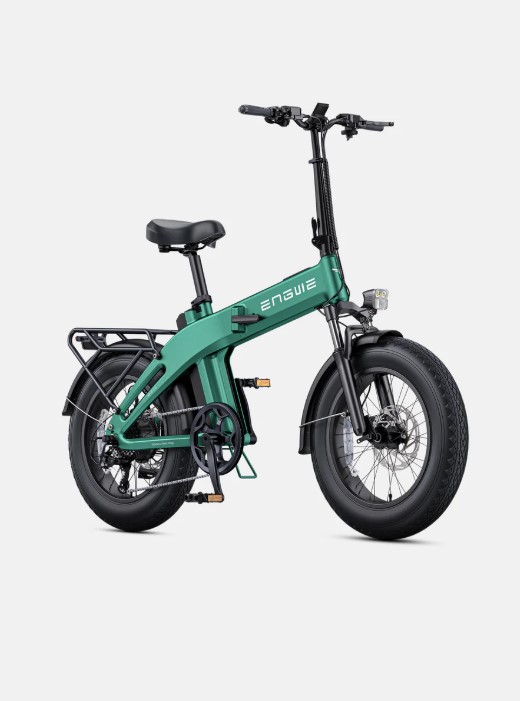
If this model matches your riding needs, you can check the latest official pricing below.
🔥 Limited-Time Official Discount
Check today's official price and available promotions before stock changes.
🚴 Check Today's Price✅ Official Store ✓ Secure Checkout ✓ Fast Shipping
What Real Customers Say About ENGWE

📊 Read all verified reviews on Trustpilot →
Shipping: United States 3-7 business days Free shipping. Processing Time: 1-2 business days.
🔥 Limited-Time Official Discount
Check today's official price and available promotions before stock changes.
🚴 Check Today's PriceFAQ: Understanding E-bike Performance
1. Are there street-legal e-bikes that go 60mph?
Generally, no. E-bikes limited to 28mph are the legal standard for bicycle lanes. Anything capable of 60mph is classified as a motorcycle or electric scooter and requires registration, insurance, and a license.
2. Can I modify my e-bike to reach 60mph?
Modifying an e-bike motor or controller to increase speed is dangerous and often voids your warranty. It also places immense strain on components not designed for such velocities, leading to potential frame or brake failure.
3. Why is speed restricted on most e-bikes?
Speed restrictions ensure that e-bikes can safely share infrastructure with traditional bicycles and pedestrians. Higher speeds require specialized infrastructure and safety equipment.
4. Is the ENGWE EP-2 3.0 fast enough for city commuting?
Yes, it is designed for urban environments, providing efficient acceleration and enough speed to keep pace with city traffic safely while remaining portable enough for storage.
5. How do I maintain my high-performance e-bike?
Regular checks of the braking system, tire pressure, and electrical connections are vital. Always follow the manufacturer’s service intervals to ensure safety.
6. What is the main risk of high-speed e-bikes?
The primary risk is brake failure and frame fatigue. Standard bicycle frames are not built to withstand the high torque and stress of 60mph propulsion.
7. How long does the battery last at high speeds?
Range decreases drastically at higher speeds. Wind resistance and motor load mean you will get significantly less range than the manufacturer's eco-mode estimate.
8. Do I need a special helmet for fast e-bikes?
If your e-bike can exceed typical bicycle speeds, a motorcycle-rated helmet (DOT or ECE) is highly recommended for adequate protection.


Social Plugin