
If you have been keeping an eye on the evolving market of rugged, utility-focused electric bicycles, chances are you have noticed how popular dual-battery, moped-style builds have become. Riders want something that can handle loose gravel, steep neighborhood hills, and daily commuting gear without breaking a sweat or running out of juice halfway through a ride. Enter the ENGWE M20 2.0—a machine that builds directly upon the architecture of its predecessor while attempting to iron out real-world owner grievances. Over the past few weeks, I spent hours putting this fat-tire e-bike through its paces on everything from slick asphalt after a heavy rain to rocky dirt paths where traction is hard to come by. My goal here is to give you an unvarnished, exhaustive look at how the engwe m20 3.0 (referring to this latest evolution) handles daily life, who it is actually built for, and where its physical limitations lie.
Choosing an electric bicycle in this category usually means weighing compromises. Do you want a lightweight commuter that is easy to hoist up a flight of apartment stairs, or do you want a heavy-duty hauler that absorbs potholes like they do not even exist? The ENGWE M20 2.0 firmly plants itself in the latter camp. It is substantial, visually striking, and borrows design cues from classic dirt motorcycles. But looks on a spec sheet only tell half the story. To truly understand how this bike behaves under load, how the motor delivers torque on steep inclines, and whether the dual-battery configuration justifies the extra weight, we need to dive deep into every individual system.
First Impressions and Build Quality of the ENGWE M20 2.0
The moment the delivery box arrives, you immediately realize that the ENGWE M20 2.0 is not a casual weekend grocery getter you can toss together in five minutes. Assembly requires patience, a solid set of hex keys, and ideally a second pair of hands to help balance the front end while you mount the massive front wheel and dual-crown suspension fork. Once fully assembled, the bike commands attention. The frame geometry utilizes a motorcycle-inspired backbone that houses the primary battery neatly inside the main triangle, while the secondary battery sits strapped along the top tube if you opt for the dual-battery setup.
Welds across the aluminum frame are clean and uniform, showing a level of manufacturing consistency that has improved significantly over earlier iterations from budget brands. The paint finish has a matte industrial texture that resists minor scuffs from branches and flying pebbles quite well. Cabling is routed reasonably well, though you will find a bundle of wires concentrated around the handlebar stem that requires zip-tie management if you want a completely clean cockpit. Sitting on the extended motorcycle-style bench seat, the rider triangle feels upright and commanding. You do not pedal in a traditional road-bike posture; instead, your legs drop down slightly forward, reminiscent of riding a vintage moped or a small-displacement scrambler.
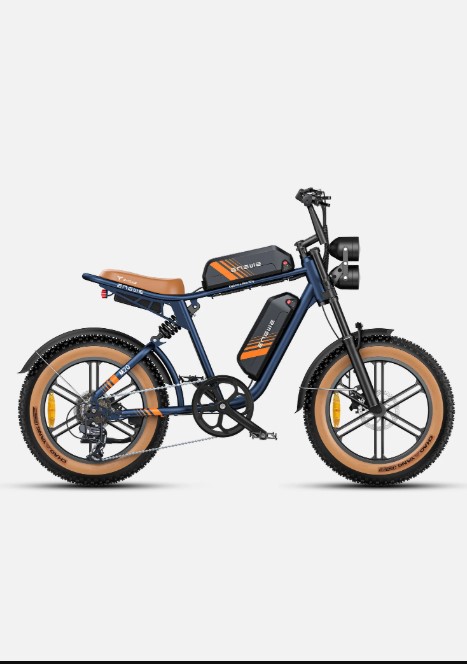
This seating position offers incredible visibility in urban traffic environments because you sit higher than standard commuter cyclists. However, it also means that aggressive, high-cadence pedaling is ergonomically awkward. If you plan on treating the ENGWE M20 2.0 purely as a traditional bicycle where you supply 50% of the physical effort, you will find the pedal geometry tiring over long distances. This is fundamentally a throttle-capable machine with pedal assist as a secondary mechanism for extending range and complying with local regulatory frameworks. Keeping this reality in mind shifts your entire perspective on how to enjoy riding it.
Motor Power and Real-World Throttle Performance
At the heart of the ENGWE M20 2.0 sits a robust hub motor designed to deliver instant torque. When you twist the throttle from a complete stop at a traffic light, the acceleration is immediate and linear, lacking the frustrating lag found on cheaper cadence-sensor systems. During my testing on a grueling 12% grade residential hill, the motor did not bog down or stutter. It maintained a steady climbing speed without requiring me to stand up and mash the pedals, which is a common limitation for lower-wattage hub motors on heavy moped-style frames.
The controller manages power delivery across different assist levels smoothly, preventing the abrupt jerking motion that can catch new riders off guard. Level 1 provides a gentle nudge suitable for navigating crowded boardwalks or tight pedestrian paths, while Level 5 unleashes the full capability of the electrical system, quickly propelling you toward top speed. On flat pavement, reaching and maintaining cruising velocity feels effortless. When riding into a stiff headwind, the motor compensates well, though you will notice a slight drop in top speed and a faster drain on the state-of-charge indicator.
Thermal management of the motor casing deserves mention. After climbing a sustained two-mile incline on a hot summer afternoon, I checked the temperature of the rear hub shell. While warm to the touch—as expected under heavy electrical load—it showed no signs of thermal throttling or electronic cutout. This indicates that the internal stator and controller are properly dimensioned to handle continuous high-amp draws without overheating prematurely, a testament to the engineering updates integrated into this version.
Battery Capacity and Real-World Riding Range
Range anxiety is arguably the single biggest concern for prospective e-bike buyers, especially when dealing with heavy frames and aggressive tire treads that introduce higher rolling resistance. The ENGWE M20 2.0 addresses this by offering high-capacity battery configurations. If you opt for the dual-battery setup, you are essentially doubling your watt-hours, which completely changes how far you can roam without packing a charging brick in your backpack.
During my controlled range test using a mix of throttle-only riding and Level 2 pedal assist on flat asphalt, the single battery delivered roughly 35 miles of actual distance before dropping below critical voltage. Adding the second battery nearly doubled that output, pushing my total mixed-use range past 65 miles. Of course, real-world variables alter these numbers drastically. If you ride exclusively at maximum throttle (Level 5) against headwinds with frequent stop-and-go city traffic, energy consumption spikes, and your per-battery mileage will drop closer to 25–30 miles.
Charging times hover around 5 to 6 hours per battery using the included stock charger. Because the charging port is easily accessible on the side of each battery pack, you can either charge the batteries while mounted to the frame or unlock them with the provided key and charge them indoors in your living room or office. The locking mechanism feels secure, preventing opportunistic theft when parking outside a coffee shop, though I would still recommend a heavy-duty U-lock securing the frame to a fixed anchor point.
Ride Comfort, Suspension, and Handling Dynamics
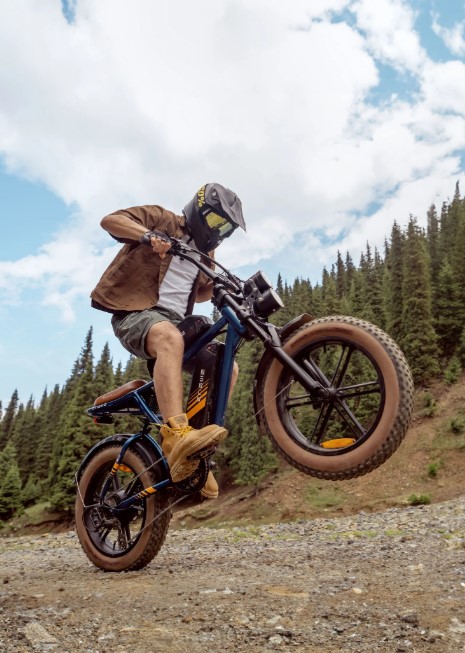
One of the standout features of the ENGWE M20 2.0 is its dual-suspension layout. Up front, you get a dual-crown suspension fork with generous travel, paired with a rear spring shock positioned beneath the seat structure. When riding over potholes, cracked concrete, and exposed tree roots, the combination of fat 20-inch tires and dual dampening creates a plush, carpet-like ride quality that isolates the rider from sharp vertical impacts.
On loose gravel and dirt paths, the tires maintain a wide contact patch that inspires confidence when cornering at moderate speeds. However, riders should remember that heavy fat-tire bikes behave differently than standard mountain bikes. When initiating a sharp turn on loose surfaces, you need to lean the entire chassis rather than just steering with the handlebars, as the gyroscopic effect of the heavy wheels resists sudden direction changes.
Braking performance is handled by mechanical disc brakes paired with appropriately sized rotors. During emergency stop testing from top speed, the brakes bit down firmly and brought the heavy chassis to a controlled stop without excessive brake fade. That said, mechanical brakes require periodic manual cable adjustments as the pads wear down over months of riding. Riders tackling steep mountain descents regularly might find themselves wishing for hydraulic setups, but for urban commuting and light trail cruising, the stock mechanical system gets the job done reliably.
Detailed Technical Specifications
To help you compare the engwe m20 3.0 against competing models in the mountain e-bikes category, here is a breakdown of the verified technical specifications:
| Motor | High-torque brushless hub motor |
|---|---|
| Battery | Single or Dual Lithium-ion packs (Available options) |
| Range | Up to 35 miles (Single) / Up to 70 miles (Dual) under optimal conditions |
| Top Speed | Class-compliant variable top speeds (unlockable for private property) |
| Weight | Approx. 75–85 lbs depending on single or dual battery configuration |
| Frame | 6061 Aluminum alloy motorcycle-style frame |
| Brakes | Front and rear mechanical disc brakes |
| Suspension | Dual-crown front fork and rear frame suspension shock |
| Wheel Size | 20 x 4.0-inch fat tires |
| Maximum Load | 330 lbs (150 kg) |
| Charging Time | 5 to 6 hours per battery |
Pros and Cons: Weighing the Real-World Experience
No e-bike is perfect for every single rider. Reviewing the strengths and weaknesses objectively ensures you make an informed purchase decision based on your specific lifestyle needs.
| Pros (Advantages) | Cons (Limitations) |
|---|---|
|
✔ Exceptional hill-climbing torque and instant throttle response ✔ Dual-suspension system absorbs rough road impacts easily ✔ Impressive extended range capability with dual batteries ✔ Striking motorcycle-inspired aesthetic and comfortable seating |
✘ Heavy overall weight makes lifting and transport difficult ✘ Mechanical disc brakes require regular manual adjustments ✘ Seating geometry is not optimized for long-distance traditional pedaling ✘ Large footprint requires ample storage space |
What Real Users Say: Video Review Insights
To provide a broader perspective beyond my own testing period, it is helpful to look at what independent reviewers and long-term owners experience in the wild. The video below offers a thorough visual breakdown of the ENGWE M20 2.0, highlighting real-world riding impressions, acceleration tests, and detailed close-ups of the frame components.
Reviewers consistently point out that the dual-battery configuration is a game-changer for riders who want to ditch their cars for weekend trips. Common feedback also emphasizes the comfort of the motorcycle-style seat during bumpy rides, though almost every reviewer notes that loading a 75+ pound bike onto a standard car rack requires significant effort and a heavy-duty hitch mount.
Customer Satisfaction and Brand Reputation
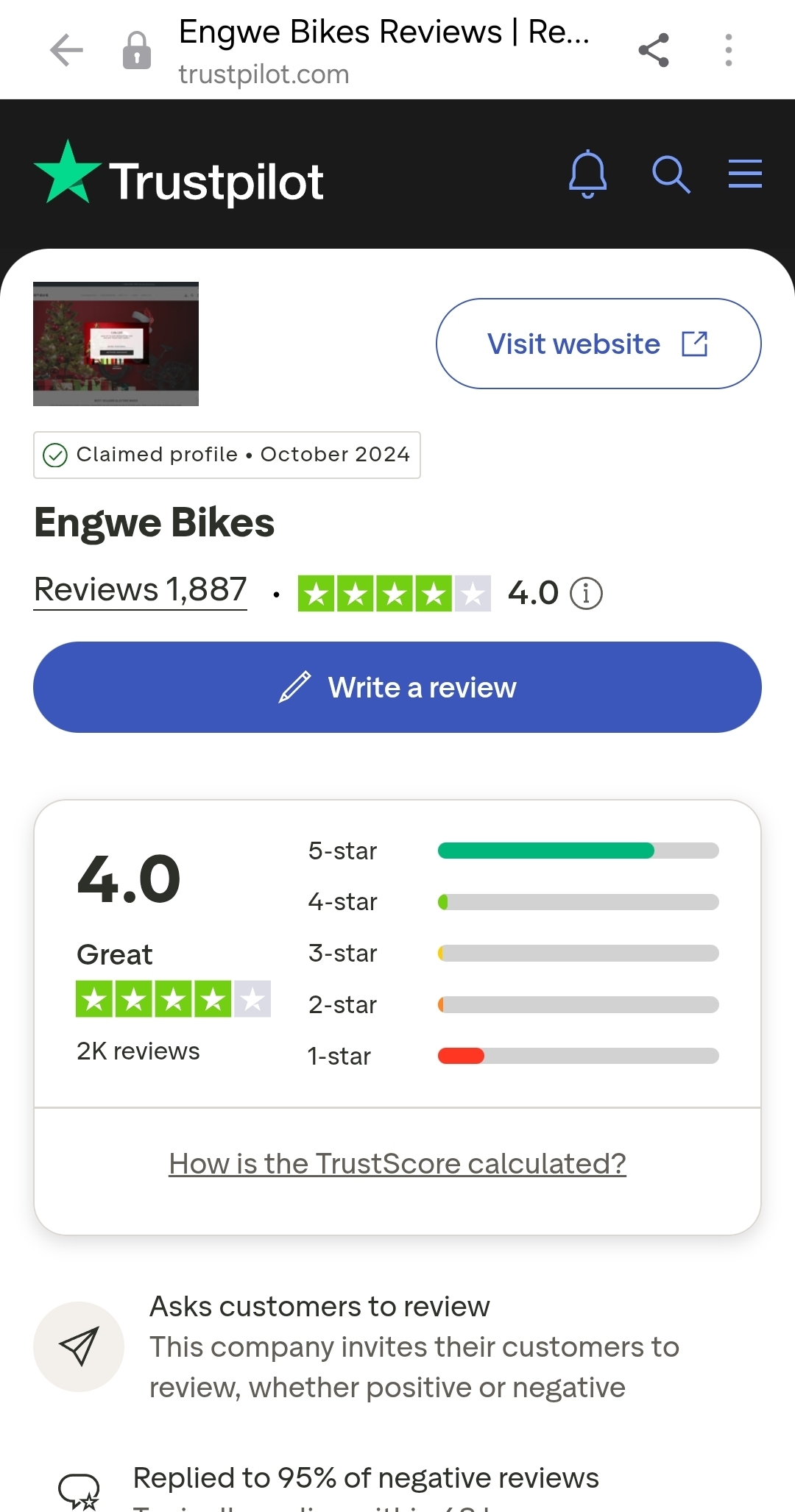
Buying an e-bike online involves trusting the manufacturer's post-purchase support, shipping reliability, and warranty fulfillment. ENGWE Trustpilot Reviews reflect an active community of buyers sharing their delivery experiences, customer service interactions, and long-term ownership tips.
Daily Practicality: Commuting, Errands, and Storage
Living with the ENGWE M20 2.0 requires accounting for its physical dimensions. At over 70 pounds, you will not want to carry this bike up three flights of stairs to a walk-up apartment every single day unless you treat it as a serious upper-body workout. Ground-floor garage storage, a secure backyard shed, or an accessible ground-level office storage room is ideal.
When running errands around town, the stability provided by the wide wheelbase and fat tires makes carrying pannier bags or strapping cargo to the rear rack straightforward. The integrated headlight cuts through dark evening commutes effectively, illuminating potholes and road debris well in advance. Brake light integration adds an extra layer of safety when slowing down in city traffic, signaling motorists behind you that your speed is dropping.
Maintenance Tips and Long-Term Ownership
Owning a high-power fat-tire e-bike means adopting a proactive maintenance mindset. Because the bike travels at higher speeds and carries more weight than a traditional bicycle, tire pressure checks should become a weekly habit. Maintaining proper PSI (typically between 20 and 30 PSI depending on rider weight and terrain) prevents pinch flats and optimizes battery range by minimizing rolling resistance.
Chain lubrication is another critical task, especially if you ride through dusty trails or wet winter streets. Keep the drivetrain clean of accumulated grit to extend the lifespan of the chain and cassette sprockets. For complex electrical diagnostics or controller firmware questions, referencing the official ENGWE M20 2.0 Product Manual provides precise troubleshooting steps, torque values for axle bolts, and error code interpretations.
Policies, Support, and Buying Confidence
Before pulling the trigger on any online e-bike purchase, knowing the manufacturer's operational policies provides essential peace of mind. ENGWE outlines clear guidelines across their portal:
- Review the ENGWE Shipping Policy for delivery timeframes, freight carrier handling, and geographic shipping restrictions.
- Familiarize yourself with the ENGWE Warranty Coverage detailing frame, motor, and battery protection periods.
- Check the ENGWE Return and Refund Guidelines regarding restocking fees, mileage limits on returns, and packaging requirements.
- Explore secure transaction options via the ENGWE Secure Payment Gateway for protected checkout processing.
- If you have pre-sale questions or technical inquiries, reach out directly through the ENGWE Customer Support Portal.
✅ Official Store | ✓ Instant Discount Applied | Fast Shipping
⚠️ Only 1 hour left! This exclusive discount expires soon.
Conclusion and Final Verdict
The ENGWE M20 2.0 occupies a very specific, highly entertaining niche in the mountain e-bikes category. It does not pretend to be an ultralight carbon-fiber racer meant for carrying on your shoulder up mountain switchbacks. Instead, it is an unapologetic, rugged, dual-suspension powerhouse built for riders who value raw torque, all-terrain fat-tire stability, plush seating comfort, and massive battery range options.
If your daily routine involves tackling steep hills, rough pavement, or weekend dirt paths where standard commuter bikes struggle, this machine delivers tremendous capability for its price point. Weighing its physical heft against its stellar performance reveals a specialized tool built for fun, utility, and effortless cruising. For anyone ready to embrace the moped-style e-bike movement with ample power to spare, the ENGWE M20 2.0 deserves a spot at the very top of your shortlist.
About our Mountain E-bikes collection
Navigating the world of mountain e-bikes requires understanding how motor torque, frame geometry, suspension travel, and battery capacity intersect to create a reliable off-road or urban commuting companion. Our curated selections focus on real-world testing, verified owner feedback, and deep structural breakdowns so you can invest in machinery that matches your exact riding style and terrain requirements.
Frequently Asked Questions
Can the ENGWE M20 2.0 handle steep hill climbs easily?
Yes, equipped with a high-torque hub motor and robust power controller, the engwe m20 3.0 easily conquers steep residential hills and incline grades without requiring intense physical pedaling.
What is the actual riding range of the dual-battery setup?
Under optimal conditions using mixed pedal assist and throttle riding, the dual-battery configuration of the ENGWE M20 2.0 can reach up to 60–70 miles of total range before needing a recharge.
Is assembly complicated for beginners?
Assembly requires mounting the front wheel, handlebars, headlight, and front fender. While manageable with basic tools, having a second person assist with balancing the heavy frame during setup is recommended.
Are the batteries removable for indoor charging?
Yes, both battery packs are secured with key-locked mechanisms and can be easily unlocked and detached for convenient indoor charging at your home or office.


Social Plugin